GPTZero vs WriteHuman: Can the Humanizer Beat the Detector?
GPTZero vs WriteHuman isn’t a hypothetical matchup for us — my agency runs both tools every week as part of the same content pipeline. GPTZero is what our client-side editors check content against; WriteHuman is what we run AI-assisted drafts through before they get there. This comparison is based on that actual workflow, not a one-off test.
Quick Overview
| GPTZero | WriteHuman | |
|---|---|---|
| What it does | Detects AI-generated text | Rewrites AI text to sound human |
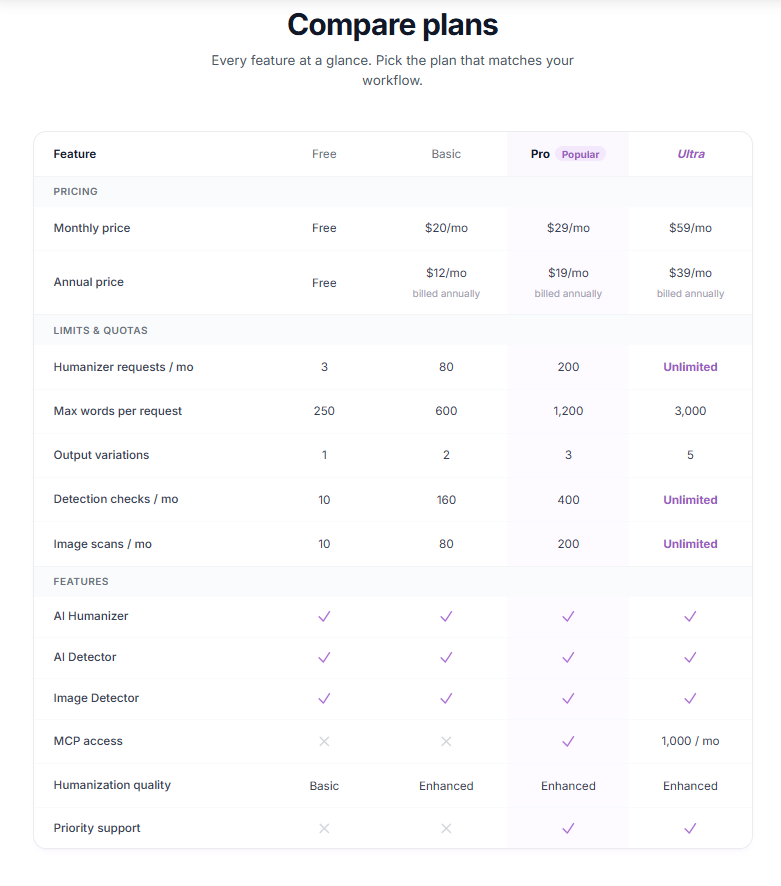
| Free tier | 10,000 words/month, permanent | 3 requests/month, 250 words each |
| Starting paid price | ~$8.33/mo (annual) | ~$12/mo (annual) |
| Best for | Educators, editors, publishers checking content | Marketers, agencies publishing AI-assisted content |
| Built-in opposite tool | No | Yes — includes its own AI detector |
| Languages | Primarily English | 40+ languages |
| API available | Yes (Professional tier) | Yes (word-based pricing) |
How This GPTZero vs WriteHuman Comparison Works
Rather than run a one-off test, I’m drawing on what my team actually sees running both tools across roughly 30-40 pieces of content a month. Independent third-party testing backs up the general pattern we’ve observed, so I’m citing both where they line up.
Does WriteHuman Actually Beat GPTZero?
Based on what we’ve seen, partially — and it depends heavily on length and detector strictness.
WriteHuman’s humanized text reliably lowers GPTZero’s AI-probability score for shorter passages — independent testing found scores dropping to around 22% after processing, which matches roughly what we see on blog-length content. That’s a real result, not just a marketing claim.
But it’s not a clean pass every time. GPTZero’s Writing Process feature — which analyzes revision history and typing patterns rather than just the finished text — is specifically harder for any humanizer to defeat, because it isn’t judging style alone. We’ve had longer pieces (2,000+ words) come back flagged even after a WriteHuman pass, simply because restructuring that much text tends to introduce inconsistencies GPTZero picks up on.
Head-to-Head: Where Each Tool Wins
GPTZero wins on:
- Free tier usability — 10,000 words/month with no expiration beats WriteHuman’s 3 requests/month by a wide margin
- Detail — sentence-level highlighting shows exactly what’s flagged, not just a percentage, which is what makes it useful for actually coaching writers
- Institutional trust — LMS integrations make it the default in classrooms, which matters if you’re being evaluated by a teacher or client who’s already using it
WriteHuman wins on:
- Language coverage — 40+ languages vs. GPTZero’s English-first focus
- All-in-one workflow — humanize and check in the same dashboard, which is the exact reason it’s stayed in our pipeline
- Output flexibility — up to 5 variations per request on the Ultra plan, which speeds up editing meaningfully
Where Each Tool Actually Fits
Use GPTZero if:
- You’re an educator, editor, or client-side reviewer who needs to check whether content was AI-generated
- You want sentence-level detail, not just a pass/fail score
- You need LMS integrations (Canvas, Google Classroom, Moodle)
Use WriteHuman if:
- You’re publishing AI-assisted content and want it to read more naturally before it goes live
- You want a built-in detector so you’re not juggling two separate tools
- You’re working across multiple languages
Use both if:
- You’re running a content team that generates with AI, humanizes with WriteHuman, and wants a final GPTZero pass before publishing — this is exactly our two-step workflow, and it’s held up well across a year of real client work
What This Means If You’re a Student
Worth being direct about this: if the text is going through Turnitin rather than GPTZero, WriteHuman’s success rate drops considerably — independent testing found scores around 28% on Turnitin even after humanizing, which would still get flagged at most institutions. Don’t treat a WriteHuman pass on GPTZero as proof it will also pass a stricter academic detector.
What This Means If You’re a Content Marketer or Agency
For blog posts, product descriptions, and social copy, the stakes are usually lower than academic integrity cases, and shorter-form content is exactly where WriteHuman performs best. Our actual workflow: draft with AI, humanize with WriteHuman, run the result through GPTZero’s free tier as a final sanity check, then a human editor reads it before it ships. That fits inside GPTZero’s free 10,000-word monthly allowance for most individual writers, though at our team’s volume we’ve moved to a paid tier on both tools.
FAQ
Can GPTZero detect WriteHuman’s output? Sometimes. Short, well-humanized passages using WriteHuman’s enhanced model often score lower, but GPTZero’s Writing Process feature and longer-text analysis catch a meaningful share of humanized content — especially anything over 2,000 words or run through WriteHuman’s free/basic model.
Is it worth using both tools together? In our experience running this GPTZero vs WriteHuman workflow for over a year, yes — humanize with WriteHuman, then verify with GPTZero before anything goes to a client.
Which one is cheaper to start with? GPTZero’s free tier is more usable (10,000 words/month vs. WriteHuman’s 3 requests/month), and its entry paid tier is slightly cheaper on annual billing (~$8.33/mo vs. ~$12/mo).
Does either tool work well for academic writing specifically? GPTZero is widely used in academic settings and integrates with major LMS platforms. WriteHuman’s success rate on strict academic detectors like Turnitin is notably lower than on more lenient tools like GPTZero itself.
Bottom Line: GPTZero vs WriteHuman
GPTZero and WriteHuman aren’t really competitors in our workflow — they’re two steps in the same process. The more useful question isn’t “which one wins” but whether your workflow needs a detector, a humanizer, or both. For a team publishing AI-assisted content regularly, running this exact GPTZero vs WriteHuman combination — humanize, then verify — has been the safer setup for us. For anything facing strict institutional review, treat WriteHuman as a helpful edit, not a guarantee.